Science & Discovery
Canadian Astronomers Refine Deep-Space Imaging with Updated Observatory Systems
Astronomers in Eastern Canada have implemented major software and hardware upgrades at key observatories, significantly enhancing their ability to capture high-resolution images of distant galaxies, nebulae, and other deep-space phenomena.
By Ava Harrington • November 19, 2025
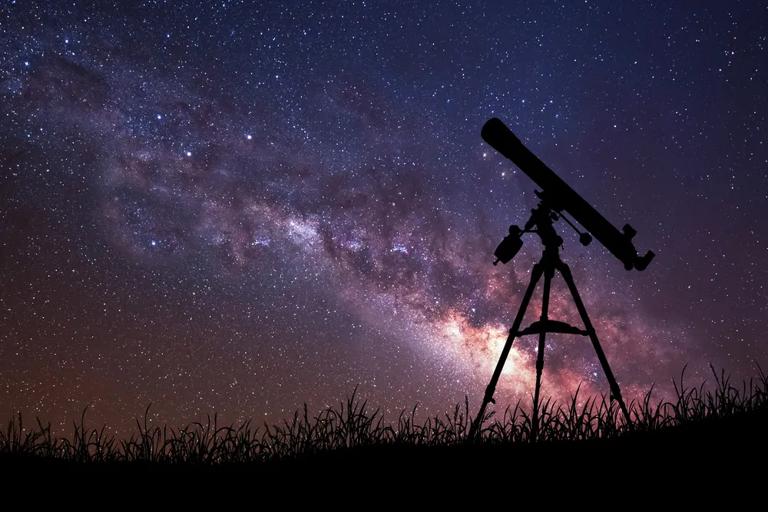
Astronomers across Eastern Canada are reporting major improvements in deep‑space imaging following a series of hardware upgrades at regional observatories. New mirror coatings and enhanced light‑capture assemblies have allowed telescopes to record sharper data from faint galaxies, revealing structural features that had previously gone undetected. Researchers say these advancements will strengthen Canada’s role in international sky‑mapping collaborations.
The installation of next‑generation calibration systems has enabled observatories to fine‑tune their instruments with far greater precision. These upgrades help reduce distortions caused by temperature fluctuations, mechanical drift, and atmospheric interference. Technicians involved in the calibration work say the improvements have already reduced error margins in stellar measurements, giving astronomers a more reliable foundation for long‑term comparative studies.
Software engineers working with observatory teams have introduced updated star‑mapping algorithms capable of processing massive datasets in record time. The tools rely on advanced pattern‑recognition methods that can identify weak or overlapping light sources, a task that previously required hours of manual verification. Observers say the new software has dramatically accelerated the pace of nightly analysis.
During recent field sessions, researchers testing upgraded sensor arrays reported heightened sensitivity when tracking dim and fast‑moving objects. These arrays are designed to withstand the harsh nighttime temperature swings common in Maritime regions, ensuring consistent performance throughout long observation windows. Their resilience has enabled teams to extend imaging runs without the interruptions often caused by equipment instability.
Long‑range imaging tests have yielded remarkable detail in early snapshots of distant galaxy clusters. The combination of enhanced tracking systems and improved optical components has allowed astronomers to capture clean, continuous exposures even during windy conditions. According to project leads, these results demonstrate that regional facilities can now support scientific work previously limited to larger international observatories.
Collaborative programs between Canadian institutions have expanded significantly as new technology opens opportunities for shared research. Several universities are now pooling observation time to study the same deep‑space targets from different latitudes, generating composite images that reveal contrasting angles of celestial structures. This coordinated approach is helping build more complete profiles of galaxies under investigation.
Recent trials aimed at monitoring nebula activity have shown that upgraded wide‑field lenses can capture subtle color variations in ionized gas clouds. These color shifts offer clues about temperature changes and material movement within the nebulae. Astronomers say the refined imagery will support more accurate modeling of stellar formation cycles occurring within these regions.
A separate team studying nova activity has leveraged the observatories’ faster data‑processing capabilities to detect brightness changes within minutes rather than hours. This rapid turnaround is crucial for capturing transient astronomical events, which can evolve quickly and disappear without warning. The advancements are expected to improve Canada’s participation in global alert networks that track sudden cosmic phenomena.
Efforts to combat atmospheric distortion have also taken a step forward through the implementation of adaptive‑optics simulations. Although full adaptive‑optics systems are not yet installed, preliminary software models have helped astronomers plan future upgrades by predicting distortion patterns. These models allow teams to experiment digitally before committing to costly hardware investments.
Researchers analyzing the latest telescope outputs have noted that noise‑reduction improvements in imaging equipment are yielding crisp results under challenging conditions. Nights with moderate cloud cover, once considered unusable, now offer limited opportunities for productive imaging. This expanded flexibility gives teams more chances to collect consistent data throughout the year.
The integration of portable observation modules has allowed astronomers to conduct tests outside major observatory facilities. These smaller units, equipped with refined sensors, help researchers validate calibration settings and gather supplemental data even when primary telescopes are booked or undergoing maintenance. Their deployment reflects a broader movement toward decentralized research support.
Looking ahead, observatory teams plan to introduce additional automation to streamline routine tasks such as lens alignment, exposure planning, and system diagnostics. These improvements aim to reduce manual workload and free researchers to focus more on analysis and interpretation. With several upgrades already yielding measurable results, astronomers are optimistic about the long‑term potential of Canada’s enhanced imaging capabilities.