Innovation & Tech
Canadian Robotics Labs Collaborate on Next-Generation Emergency Response Tech
Universities across Canada have begun testing joint robotics systems capable of handling hazardous rescue environments, with teams focusing on integrating heat mapping, structural assessment, and advanced autonomy into a cohesive response platform.
By Noah Sinclair • November 21, 2025
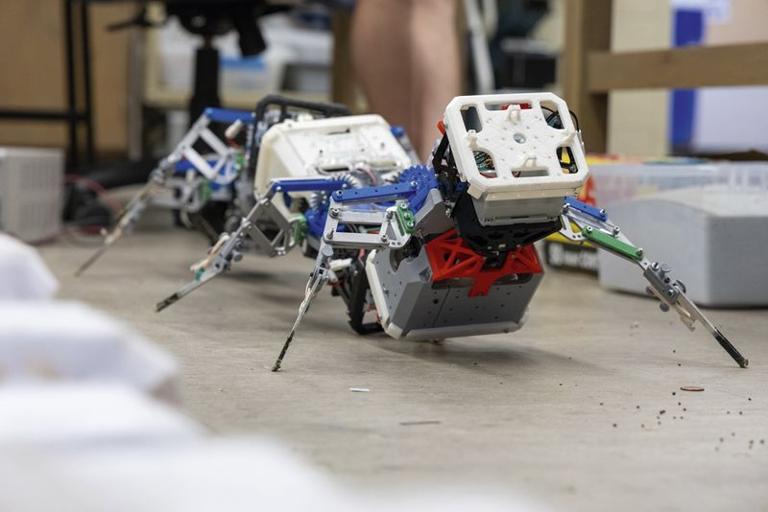
Robotics researchers across Canada are joining forces to develop machines capable of supporting emergency crews in dangerous environments. These collaborations bring together engineers, computer scientists, and field specialists who are testing prototypes designed to navigate unstable debris fields and collect structural data in real time. Early trials show that coordinated national research efforts may accelerate the deployment of robots during crises where human access is limited or unsafe.
Much of the current work focuses on improving autonomous navigation systems that allow robots to move through collapsed buildings, flooded zones, or fire‑damaged structures without direct human control. Developers are refining algorithms to help machines identify obstacles, interpret shifting terrain, and adapt quickly to new hazards. These improvements are essential to ensuring that robots can operate reliably during moments when conditions change faster than responders can react.
A separate group of researchers is testing advanced sensor packages that enable robots to map heat signatures, structural weaknesses, and air‑quality changes as they progress through an unstable site. These sensors are designed to feed information back to command teams, giving responders a clearer picture of what is happening behind blocked entryways or deep within hazardous interiors. The resulting data has the potential to guide decisions that reduce risk for human teams.
Academic partnerships have become a driving force in this work, with universities from Nova Scotia to British Columbia sharing research data and piloting cross‑provincial testing programs. By pooling expertise from different regions, teams can evaluate how robotics systems perform in a range of environmental conditions, including coastal humidity, extreme cold, and wildfire‑prone terrain. These cooperative efforts are helping Canada build a robust national framework for emergency‑response robotics.
Field testing has revealed that robotics systems must withstand both physical and operational challenges to be effective during emergencies. Engineers are experimenting with reinforced armatures and shock‑absorbent wheels to prevent damage in rugged environments, while software teams are building fault‑tolerant communication systems to preserve contact in areas with unstable signals. These improvements are shaping the next generation of machines expected to support first responders.
Looking ahead, researchers believe that continued investment in emergency‑response robotics will open opportunities for broader public‑safety applications. Prototypes developed for disaster sites may eventually assist in remote search‑and‑rescue missions, industrial inspections, or hazardous‑material assessments. As testing expands, the teams involved hope their work will not only improve safety for responders but also strengthen Canada’s leadership in applied robotics innovation.